
How to Supercharge Your Social Media Marketing with AI Images: A Pragmatic Guide for 2026
 By Delaney Brooks
Let’s be honest: the honeymoon phase of generative AI is over. We’ve all had our fun generating surrealist astronauts and laughing at six-fingered hands, but now it’s time to get down to business. For growth marketers, social media managers, and founders, the conversation has shifted from "Isn't this cool?" to "How does this lower my Customer Acquisition Cost (CAC)?"
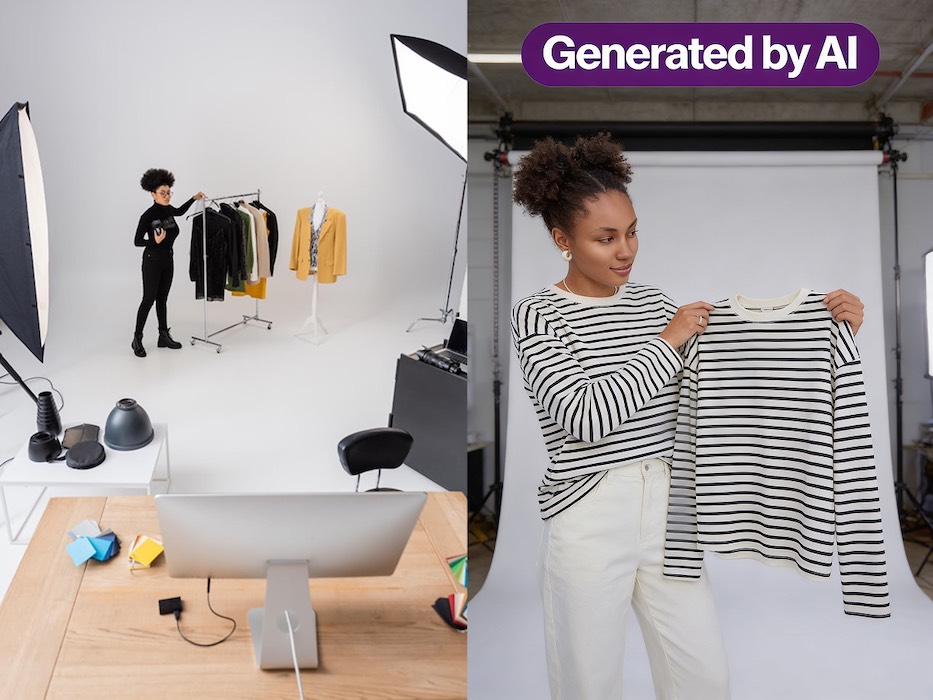 100% AI Generated. Cost: $0.15. Time: 4 seconds.
I build and operate AI image and media generation platforms for a living. Every day, I look at backend analytics, read customer support tickets from users whose generations didn't match their vision, and optimize infrastructure to handle thousands of rendering requests. From this vantage point, I get a clear, unfiltered view of what actually works in the wild. I see the distinct difference between users who churn after a month because they treat AI like a toy, and the power users who integrate it into their daily operations to scale their marketing output by 10x.
This guide bypasses the hype. It is a pragmatic, step-by-step breakdown of how to integrate AI image generation into your social media marketing pipeline to produce high-converting, brand-consistent visual assets at scale.
The New Economics of Visual Content
To understand why AI image generation is non-negotiable for modern social media strategies, we must look at the unit economics of content creation.
Historically, a high-quality ad creative required a physical product, a photographer, studio time, and a post-production editor. Even the leanest operations spent hundreds of dollars and several days per asset. Stock photos offered a cheaper alternative, but at a massive cost to brand authenticity—your competitors are likely licensing the exact same assets, leading to immediate ad fatigue.
AI flips this entire model on its head. Suddenly, the hard part isn't paying for the expensive studio time—it's coming up with enough good ideas to actually feed the machine. Instead of spending $500 and five days waiting for a single hero image, you can spend a fraction of that on a platform subscription and generate 50 hyper-targeted, A/B-testable variations in a matter of hours. This drastic reduction in the cost-of-iteration is the true ROI of AI visual tools.
The "Experience" Factor: What I See in the Backend
When launching new features or analyzing user behavior on our platforms—whether it's pure text-to-image or complex image-to-image workflows—a clear pattern emerges.
The users who complain about "AI looking fake" are almost always the ones relying on single-shot, low-effort text prompts. On the flip side, the marketing agencies and independent creators who successfully drive massive organic traffic and sales are doing something entirely different. They aren't just generating images; they are engineering visual assets with a strict methodology.
Here is the exact playbook they are using.
Strategic Playbook 1: The Image-to-Image Advantage
One of the most powerful, yet severely underutilized, features of modern AI platforms is image-to-image generation. You do not have to start from scratch. In fact, if you are a brand selling physical products, starting from scratch is often a mistake because the AI might alter your product's specific details.
We frequently see users upload a standard, boring 2D product photo—say, a skincare bottle on a white background—and use an image-to-image prompt to instruct the AI to reimagine the environment.
 Base image transformed using image2image.ai - keeping product integrity while upgrading the environment.
- The Workflow: You upload your base asset. You set the prompt to: "Place this object on a sleek marble pedestal, surrounded by shallow water ripples, dramatic cinematic lighting, keeping the original object intact and undistorted."
- The Reality: We constantly tune our algorithms to handle these specific e-commerce requests because the demand is staggering. You transform a basic catalog shot into a premium, scroll-stopping Instagram asset without needing a 3D rendering expert or a physical studio.
Strategic Playbook 2: High-Velocity A/B Testing for Global Markets
The most effective way to lower your CPC (Cost Per Click) on platforms like Meta, X, or TikTok is aggressive creative testing.
Let's say you are launching a campaign for a new line of backpacks. Instead of paying an agency to shoot the backpack in one location, you use AI to instantly iterate on the contextual background based on your target demographics.
 Testing visual context at scale: One product, three distinct demographics.
You generate one image of the backpack on a sleek, minimalist Tokyo subway seat (targeting urban professionals). You generate another in a sunlit, rugged Pacific Northwest forest (targeting outdoor enthusiasts). You generate a third in a bright, modern university library (targeting students).
By doing this, you test visual context at scale, relying on live ad data rather than intuition to find the winning creative. When we track SEO and ad performance metrics (and trust me, analyzing Semrush reports and indexation issues is a daily reality for any digital business), the campaigns backed by high-volume, AI-generated creative variations consistently outperform static campaigns.
Engineering the Prompt: A Technical Approach
This brings us to the most critical skill in the AI era.
Stop treating your prompts like poetry. If you want consistent results for your ad campaigns, you need to treat prompting more like writing a piece of code—it requires strict rules, structure, and predictability.
An amateur prompt looks like this: "A cool picture of a running shoe." The result will be unpredictable, unbranded, and likely unusable for a cohesive campaign.
A professional marketing prompt follows a strict architecture: [Subject] + [Environment/Context] + [Lighting] + [Camera Specifications] + [Stylistic Modifiers] + [Aspect Ratio]
 Treat prompting like writing code. A structured prompt guarantees consistent brand outputs.
- Example: "A sleek, neon-green running shoe resting on wet asphalt, macro photography, cinematic rim lighting, cyberpunk aesthetic, neon blue and pink reflections in the puddles, shot on 85mm lens, highly detailed, photorealistic --ar 4:5"
By standardizing your prompt architecture, your team can build an internal "Prompt Library." This ensures that regardless of who is operating the AI tool on a given day, the output remains consistently aligned with your brand's visual identity.
Integration and Workflow: The Human in the Loop
Adopting AI images is a workflow challenge, not just a technical one. We occasionally get support emails from users frustrated that the AI generated a weird shadow or misspelled a word in the background. My answer is always the same: AI provides the raw material; humans provide the polish.
Bringing AI into your daily workflow isn’t about firing your designers. It’s about giving them a superpower so they can stop grinding on background removals and start focusing on actual strategy.
 AI generates the canvas. Humans add the conversion layer.
To successfully integrate this into your tech stack, establish these guardrails:
- Define the Human-in-the-Loop (HITL): Never auto-publish AI-generated images directly to your brand's social feed. A human must review for visual anomalies, brand alignment, and structural logic.
- Combine with Typography Tools: AI is excellent at generating contextual imagery, but it is not a typography engine. The optimal workflow is generating the visual base in your AI tool, then moving the asset into Figma or Canva to overlay your precise brand fonts, logos, and calls-to-action.
- Lock in Your Color Palette: Use specific hex codes or color names in your prompts (e.g., "monochromatic #FF5733 palette") to train the outputs to match your established guidelines. Consistency is what separates a professional brand from an amateur feed.
The Bottom Line
The competitive advantage in social media marketing no longer belongs to the team with the largest production budget. It belongs to the team that can iterate the fastest, test the most variables, and adapt to visual trends in real-time.
When you stop viewing AI as a magic trick and start treating it as a scalable production engine, your entire marketing strategy changes. Start building your prompt library today, test your assumptions with real data, and let the machines do the heavy lifting.
Author Bio: Delaney Brooks is an e-commerce operator and performance marketer who has scaled multiple direct-to-consumer brands. Obsessed with unit economics and high-velocity A/B testing, Elena writes extensively about leveraging AI tools to slash creative production costs and beat ad fatigue. She regularly tests and reviews the latest visual AI platforms to find what actually works in the wild.